Rust, how a solo player with 14,782 hours survives official servers
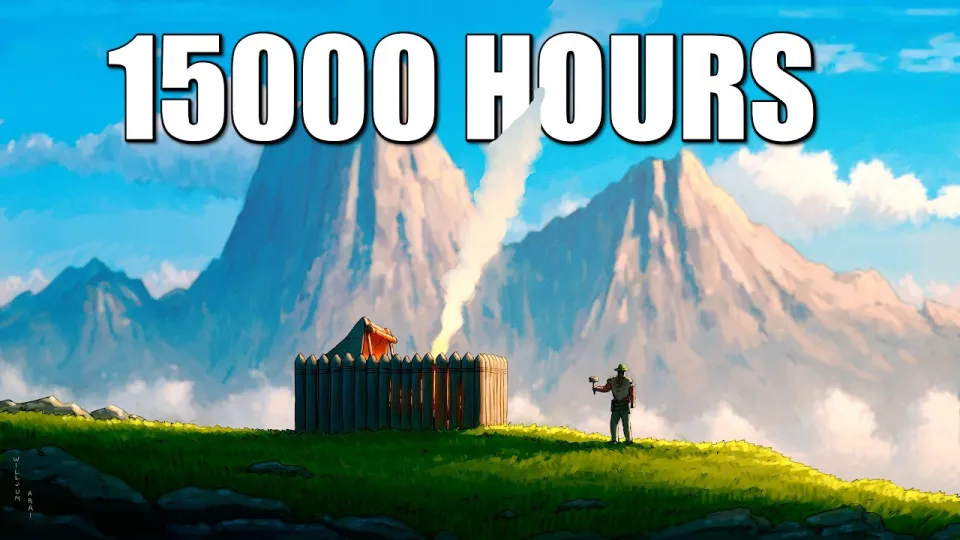
Video: How a solo with 14,782 Hours plays official rust...
You can order the same kind of articles for your own video to boost it on YouTube and Google. Just message the Telegram bot @sat_sit_bot. It writes articles around your video, embeds the video and publishes them on popular niche websites (no ads). Try it free: 50 articles on us.
· based on the channel Willjum
Key takeaways
- Willjum's account shows 14,782 hours of Rust played, roughly 1,180 hours per year if spread over 12.5 years since early access.
- The video was published on 7 June 2026 and follows a solo run on official Rust servers.
- The base in the video was designed by the builder Luca.Builds.
- Solo official Rust means no team, no shared loot and every death costing a full kit from your own boxes.
- The run includes a mannequin placed in a window as a decoy to draw fire away from the player.
Rust rewards hours more than almost any other survival game, and a solo with 14,782 hours on official servers plays the wipe as a sequence of small, low-risk decisions rather than one long fight. The core answer is simple: he builds small and cheap, spends scrap on information and mobility before weapons, avoids fights he cannot finish in seconds, and treats every base as disposable. The run in question comes from Willjum's channel, and the sponsor link for the Manscaped Beard Hedger Plus offer sits at the top of the video description.
What 14,782 hours actually means in Rust
The number is the headline, but the useful part is the arithmetic behind it. 14,782 hours works out to roughly 1,180 hours per year if spread evenly across 12.5 years, which is close to a part-time job sustained since Rust entered early access. If you count only from the 2018 full release, the same total becomes about 1,850 hours per year, near a full-time schedule.
That volume does not produce better aim so much as better pattern recognition:
- Knowing which monuments are worth a run at which population level.
- Recognizing the sound of a raid starting two grids away.
- Judging within a second whether a fight is winnable with the kit you have.
- Understanding how long a base survives before someone bothers to break in.
A solo on official servers cannot out-farm a clan, so the hours are spent converting experience into fewer wasted wipes.
Official servers versus modded and low-pop
Official Rust is the harshest environment a solo can pick: vanilla gather rates, full server populations, no team to cover a death and no admin to undo a bad trade. A low-population 2x server lets a solo rebuild after a loss in an evening; on official, losing a full kit can cost hours of farming.
The trade-off is that official servers teach the real economy of the game. Scrap is scarce, so every workbench upgrade is a decision, and every fight has to be weighed against the cost of the gear you are carrying. That is why the run leans on cheap kits and information tools instead of pushing for early high-tier weapons.
Base building: small, cheap and full of tricks
The base in this run was designed by the builder Luca.Builds, and the layout follows solo logic: compact footprint, low material cost, and nothing inside worth a full raid. A solo base is not a fortress, it is a delay tactic.
One detail viewers picked up on is a mannequin placed in a window. It costs almost nothing and draws fire from players scouting the area, which buys the defender a few seconds to reposition. Small decoys like this are worth more to a solo than an extra sheet metal door, because they work before the raid even starts.
A practical solo build checklist for official servers:
- Keep the core under four foundations so the upkeep stays trivial.
- Use multiple small bases rather than one large one; losing a 2x1 hurts far less than losing a compound.
- Store loot in several locations so a single raid cannot end the wipe.
- Place a workbench you can afford to lose, not the highest tier you can craft.
Scrap discipline and the weapon question
Scrap is the real currency of a Rust wipe, and the run treats it that way. The pattern viewers notice is a player who says he prefers not to spend scrap on weapons and then crafts another cheap gun anyway. That is not a contradiction: a solo needs a steady supply of low-cost firearms rather than one expensive rifle that disappears with the first death.
Priorities that make sense for a solo on official:
- Secure a tier 1 and tier 2 workbench before chasing tier 3.
- Buy blueprints that unlock repeatable cheap gear rather than one-off expensive items.
- Keep a stash of components for quick rebuilds after a lost fight.
- Spend leftover scrap on mobility and information, not on vanity skins.
PvP decisions a solo has to make
A solo cannot win a fair fight, so the run is built on unfair ones: third-partying, catching players mid-farm, and leaving immediately after a kill. The habit that separates experienced solo players is restraint — most encounters are declined, not lost.
The same logic applies to awareness. A player who can hear a footstep from across a field can still be surprised by wildlife, and bears remain a genuine cause of death on official servers regardless of hours played. Treating animals as a real threat, not a joke, is part of surviving long enough to keep a base.
What viewers keep asking about the run
The audience reaction to this style of video is consistent: people who never play Rust watch hour-long solo runs anyway. The most common doubts are about the hour count itself, about whether the peaceful-farmer framing is honest, and about how much of the gameplay is actually PvP skill versus preparation. The short answer to all three is that preparation is the skill — the fights are short because the setup is long.
Links from the video
- Manscaped Beard Hedger Plus — 15% off plus free shipping with code WILLJUM15
- Willjum on Patreon
- Willjum on Twitch
- Willjum on Twitter
- Creative Commons Attribution 4.0 licence
Summary
A solo with 14,782 hours does not survive official Rust by winning more fights, but by taking fewer bad ones. Small bases, cheap repeatable kits, heavy scrap discipline and a few cheap decoys do more for a wipe than any single rifle. The run is a useful template for anyone playing alone on vanilla servers, and Willjum's breakdown is the clearest illustration of that mindset currently on the channel. If you want to support the creator, the Manscaped offer page is the place to start.
Source: How a solo with 14,782 Hours plays official rust... · Markdown version
Questions & answers
How is it possible to have 14,782 hours in Rust?
It works out to about 1,180 hours per year across 12.5 years, or roughly 1,850 per year if counted from the 2018 full release. In practice, part of that total comes from the game running while the player is away from the keyboard, which is common among long-term Rust players.
Is official Rust worth playing as a solo?
Official servers are the hardest option for a solo because there are no boosted rates and no team to cover a death. The upside is that they teach the real economy of the game, where scrap and gear matter and every fight has a cost. Many solos split time between official wipes and low-pop or modded servers to practise.
Do you need high-level PvP skill to survive alone on official servers?
Less than most people assume. The deciding factor is preparation: knowing when to take a fight, when to leave, and how to rebuild quickly after a loss. A solo who avoids fair fights and only commits to unfair ones survives longer than a mechanically strong player who takes every engagement.
Why place a mannequin in a base window?
It is a cheap decoy that draws fire and attention from players scouting the base, buying the defender a few seconds to reposition. For a solo, tricks that work before a raid starts are often worth more than another layer of armour.